
Google announced today to build TalayLink subsea cable and establish two new connectivity hubs in South Thailand and Western Australia (Mandurah).
Google has selected International Gateway Company (IGC), a subsidiary of ALT Telecom PLC, as its landing partner for landing the TalayLink submarine cable in Thailand.
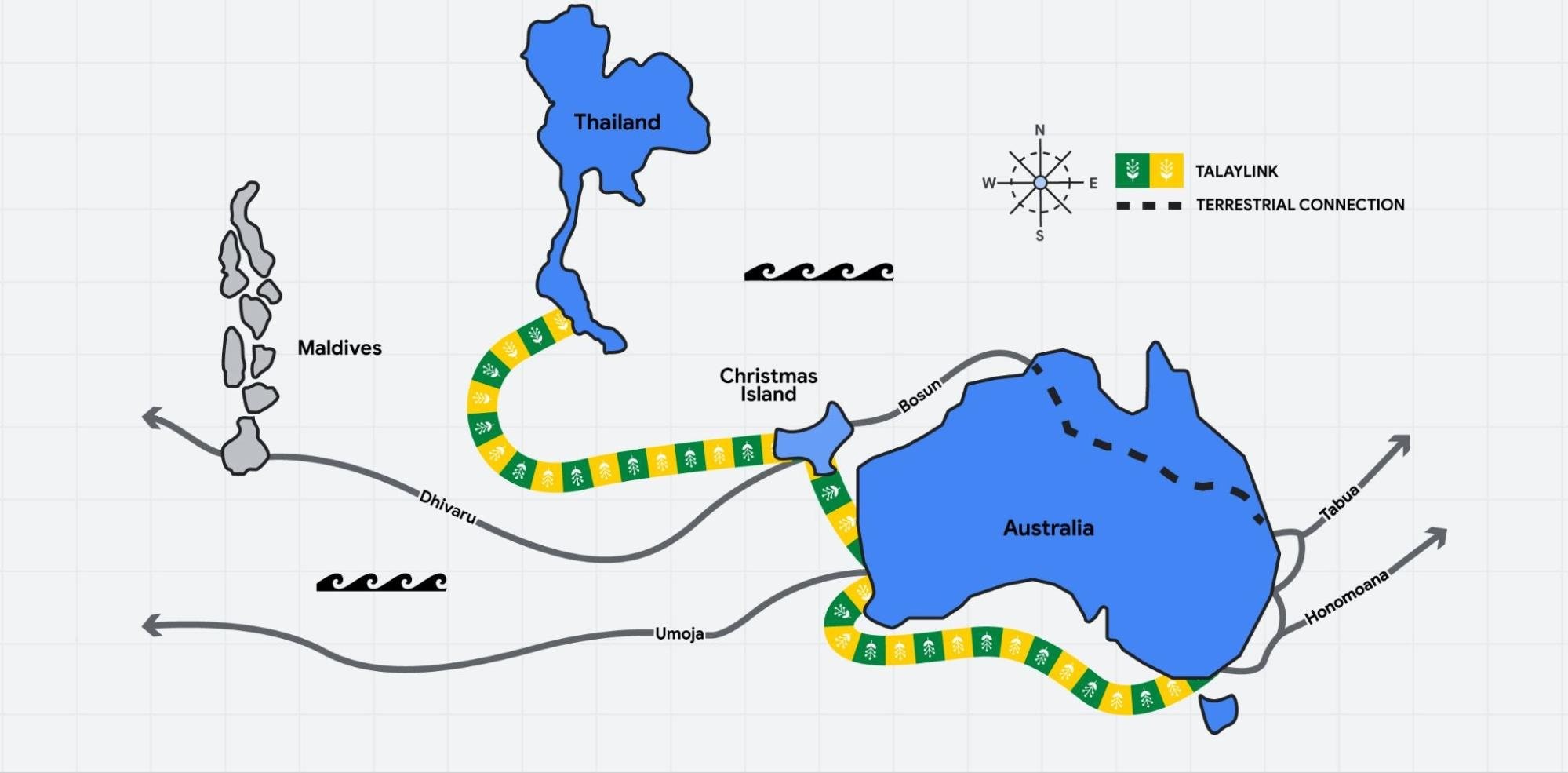
Named after the Thai word for sea or ocean, “talay,” the TalayLink subsea cable will connect Thailand and Christmas Island, Australia, extending the interlink cable that Google announced as part of the Australia Connect initiative.
The TalayLink subsea cable will establish a new, diverse path to Thailand via the Indian Ocean, west of the Sunda Strait, where many existing subsea cables currently route. The TalayLink subsea cable will significantly increase the reach, reliability, and resilience of digital connectivity across Asia Pacific and around the world. This strategic routing will further integrate Google’s future data centers and cloud region in Thailand into its global network.
In addition to the TalayLink subsea cable system, Google announced plans for two new connectivity hubs in Western Australia (Mandurah) and South Thailand. These strategic investments are designed to future-proof regional connectivity and accelerate the delivery of advanced digital and AI services through cable switching, content caching, and colocation capabilities.
The Mandurah connectivity hub will establish a diverse landing point from Perth, where the majority of existing subsea cables currently land in Western Australia.
In South Thailand, an established crossroads for subsea cables, Google is partnering with colocation provider AIS to accelerate the deployment and benefit from existing local infrastructure investments.
Google just announced in last week to build Dhivaru Trans-Indian Ocean subsea cable system connecting the Maldives, Christmas Island and Oman, and create two new connectivity hubs in the Maldives and Christmas Island.
This new cable and regional connectivity hubs will directly support Western Australia’s roadmap to secure a safe, inclusive digital future, as well as the Royal Thai Government’s objective of economic transformation through AI and digital inclusion.